
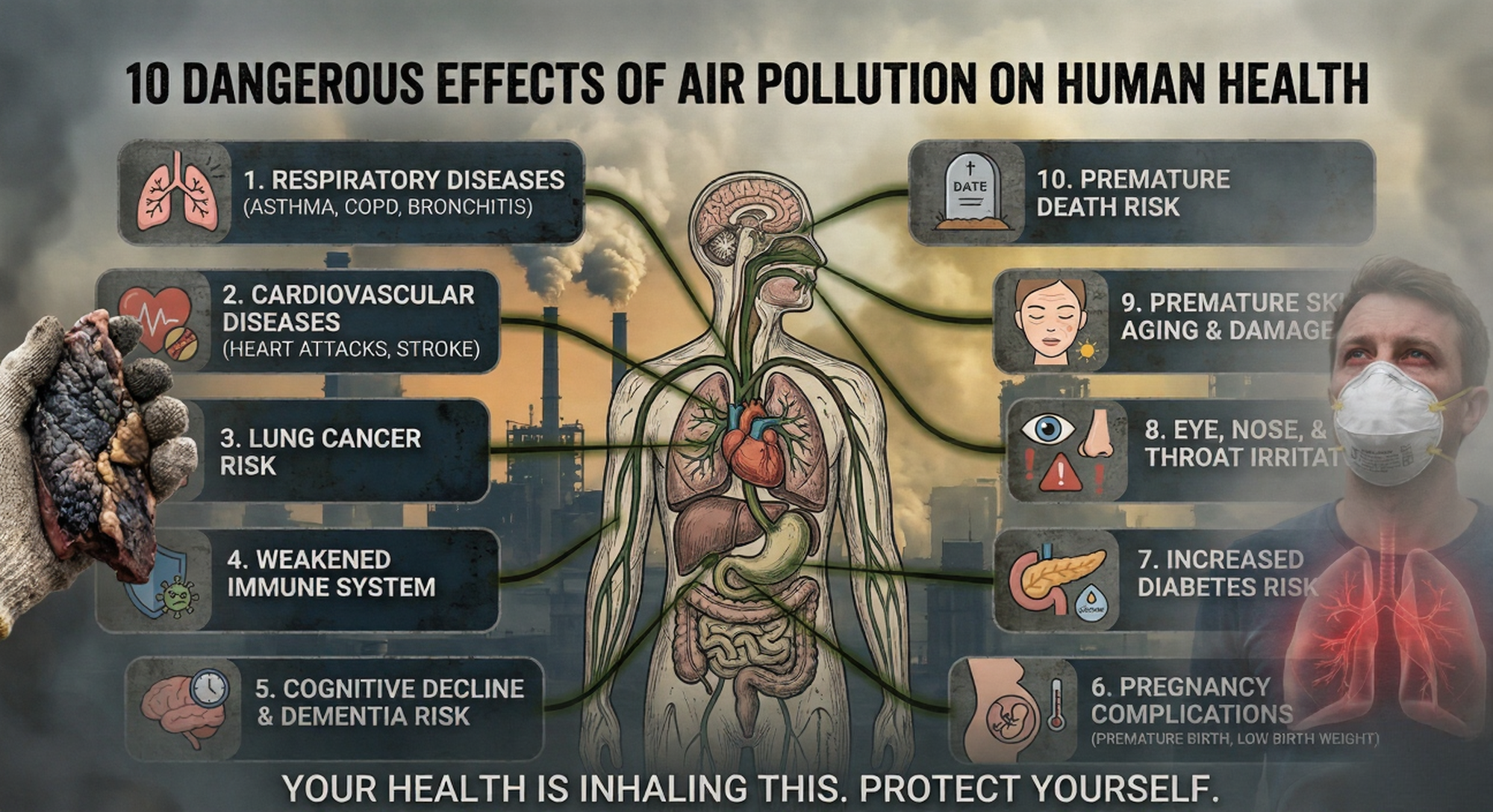
Air pollution has become one of the most serious environmental and public health problems in the modern world. The Effects of Air Pollution are clearly visible now. Rapid industrial growth, increasing vehicle emissions, construction activities, burning of fossil fuels, and urbanization have significantly worsened air quality in many cities around the world. Air pollution refers to the presence of harmful substances in the air that can damage human health and the environment. These pollutants include particulate matter (PM2.5 and PM10), nitrogen dioxide, sulfur dioxide, ozone, carbon monoxide, and various toxic chemicals released from industrial and transportation activities. Introduction One of the most dangerous characteristics of air pollution is that many pollutants are microscopic and invisible to the human eye. These fine particles can easily enter the human body through breathing and travel deep into the lungs. Some particles are so small that they can even enter the bloodstream and spread throughout the body. Once inside the body, air pollutants can trigger inflammation, oxidative stress, and damage to cells and organs. Long-term exposure to polluted air has been linked to a wide range of health problems including respiratory diseases, cardiovascular disorders, neurological damage, pregnancy complications, and even cancer. Millions of people around the world are exposed to unsafe levels of air pollution every day. In many major cities, air quality levels regularly exceed safe limits recommended by health organizations. Understanding the effects of air pollution on human health is extremely important because polluted air affects almost every organ in the body. While some health problems appear immediately, many serious diseases develop slowly after years of exposure. The following sections explain the 10 most dangerous health effects of air pollution, helping to understand how polluted air can damage the human body. 1. Respiratory Diseases One of the most common and serious health effects of air pollution is damage to the respiratory system. Since breathing is the primary way pollutants enter the body, the lungs are usually the first organs affected. Air pollutants such as particulate matter, ozone, and nitrogen dioxide irritate the airways and lung tissues. When these pollutants enter the lungs, they trigger inflammation and swelling of the respiratory passages. Fine particulate matter (PM2.5) is especially dangerous because it can penetrate deep into the lungs and settle in the alveoli. These tiny air sacs are responsible for exchanging oxygen with the bloodstream. When pollutants accumulate in these areas, the lungs cannot function properly. Air pollution significantly increases the risk of developing respiratory diseases such as asthma, bronchitis, pneumonia, and chronic obstructive pulmonary disease (COPD). People who already suffer from respiratory conditions often experience worsening symptoms when air pollution levels increase. Children are particularly vulnerable because their lungs are still developing. Exposure to polluted air during childhood can slow lung development and reduce lung capacity later in life. Elderly individuals are also at higher risk because aging lungs are more sensitive to environmental pollutants. 2. Cardiovascular Diseases Many people assume that effects of Air Pollution only affects the lungs, but research shows that it also has a serious impact on the heart and blood vessels. Fine particles from polluted air can pass through the lungs into the bloodstream. Once inside the circulatory system, these particles cause inflammation and damage to blood vessels. Over time, this damage can lead to several cardiovascular diseases. Polluted air contributes to the development of high blood pressure because inflamed blood vessels become narrower, forcing the heart to pump harder to circulate blood. Air pollution also increases the risk of heart attacks. When inflammation causes plaque buildup in arteries, it restricts blood flow to the heart. If the blood supply becomes completely blocked, a heart attack may occur. The long-term effects of air pollution include cardiovascular diseases, lung cancer, and weakened immune function. Stroke is another major risk associated with air pollution. Blood clots or damaged blood vessels in the brain can interrupt blood flow and cause permanent brain damage. Studies have shown that even short-term exposure to highly polluted air can trigger cardiovascular events, particularly among people with pre-existing heart conditions. 3. Lung Cancer One of the most dangerous long-term effects of air pollution on human health is the increased risk of lung cancer. Continuous exposure to polluted air can gradually damage lung tissues and increase the likelihood of cancer development. Polluted air often contains carcinogenic substances such as polycyclic aromatic hydrocarbons, heavy metals, and toxic chemicals released from vehicles and industrial processes. When these substances enter the lungs, they can damage DNA inside lung cells. Over time, repeated damage may lead to mutations that cause cells to grow uncontrollably and form tumors. People living in urban areas with heavy traffic pollution are particularly exposed to these harmful substances. Workers in industrial environments may also face higher risks due to prolonged exposure to contaminated air. Although smoking remains the leading cause of lung cancer, air pollution is now recognized as an important risk factor, especially for non-smokers who live in polluted environments. 4. Weakened Immune System Another serious consequence of air pollution is the weakening of the immune system. The immune system protects the body from infections and harmful microorganisms, but polluted air can interfere with its normal functioning. When harmful particles enter the body, the immune system responds by triggering inflammation. While inflammation is a natural defense mechanism, constant exposure to pollutants causes chronic inflammation that weakens immune responses. The effects of air pollution on human health are becoming a major global concern as pollution levels continue to rise in many urban areas. Air pollution also produces oxidative stress in the body. Oxidative stress occurs when harmful molecules called free radicals damage cells and tissues. This continuous damage reduces the ability of immune cells to fight infections effectively. As a result, people exposed to polluted air may experience frequent respiratory infections, colds, flu, and other illnesses. Children and elderly individuals are particularly vulnerable because their immune systems are either still developing or naturally declining with age. 5. Brain Damage and Cognitive Decline Recent scientific research