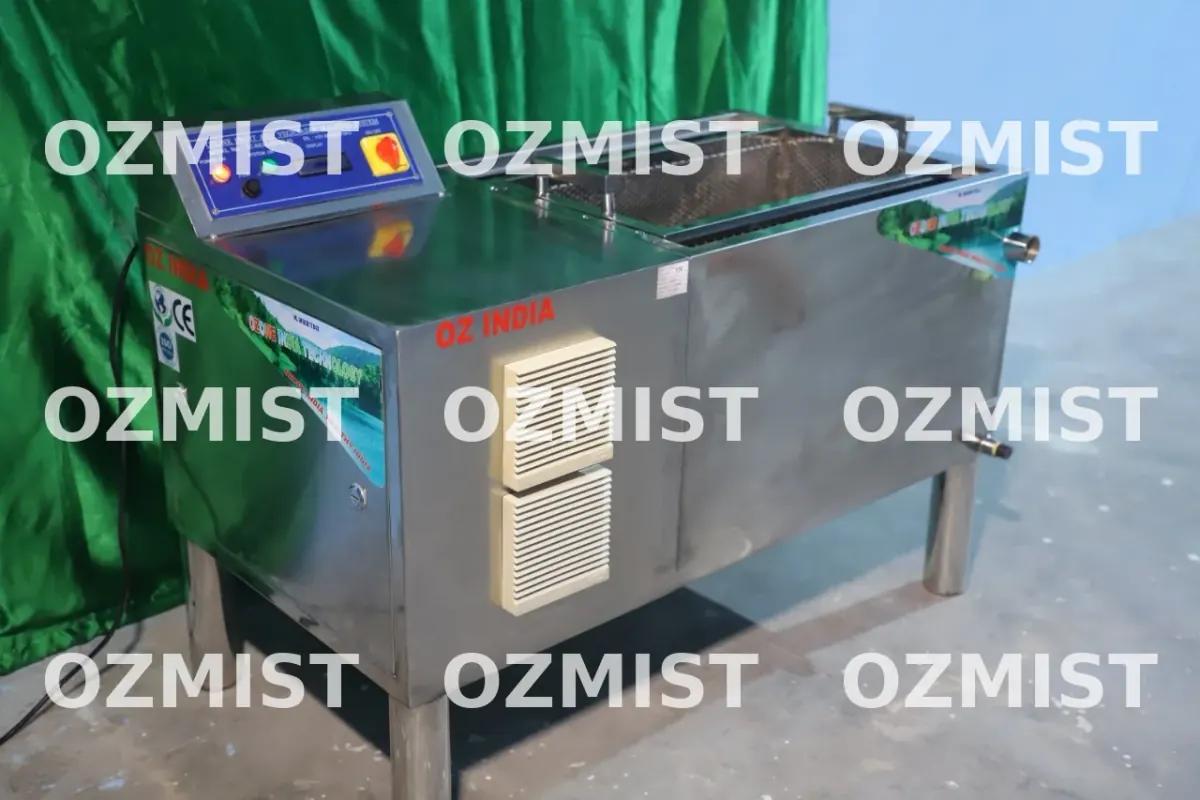
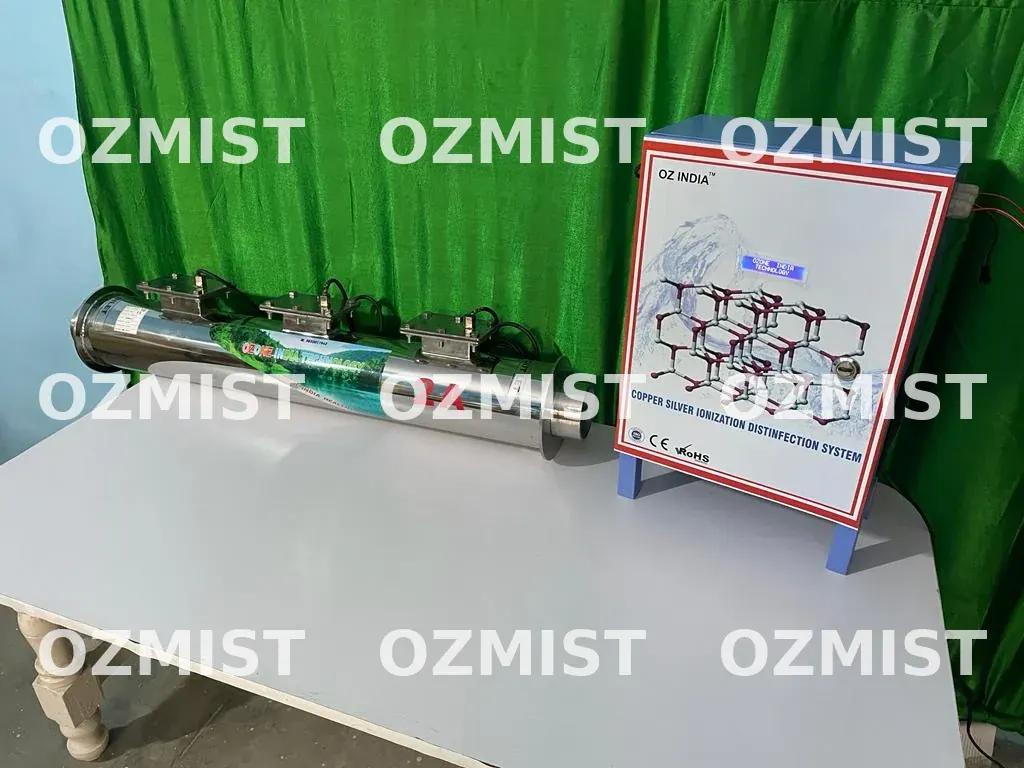
The Conveyor Fruit & Vegetable Washer is deployed across a diverse set of Indian industrial and commercial contexts. What follows is a set of expert application briefs prepared by our engineering team, each describing the operating problem, the applicable Indian and international standards, and how Ozmist's configuration is engineered to meet it.
Every application description references peer-reviewed research or a named regulatory standard so procurement teams, quality engineers, and plant managers can validate the claims against their own audit expectations. Sources are cited in the References section at the end of this page. If your application does not match one of the profiles below, contact our engineering team via the quote form — the majority of custom Ozmist installations begin with a spec conversation rather than a datasheet pick.
Frozen Vegetable IQF Lines
Frozen food processing · ISO 22000; FSSAI Schedule IV
Frozen pea, corn, spinach, carrot, and mixed-vegetable IQF lines run continuously and cannot accommodate batch washing without compromising line efficiency. The conveyor washer sits between raw-material receiving and blanching, cleaning inbound produce continuously at line speed. Because blanching is the microbial kill step, upstream washing focuses on soil, insect, and pesticide removal — the conveyor washer’s bubble zone + spray rinse achieves both. Ozmist typically ships a 1.5 tonne/hour model for mid-size IQF plants, with a heat-recovery option that pre-warms wash water using blancher exhaust.
Ready-to-Eat Salad and Meal-Kit Packing
Ready-to-eat foods · FSSAI RTE microbiological criteria; HACCP CCP
RTE salad and meal-kit brands (Q-commerce grocery, subscription meal-kits) require documented microbial reduction on every batch. The conveyor washer with optional in-water ozone at 1.5 ppm becomes the CCP in the HACCP plan. Data from Journal of Food Protection (2020) shows that continuous ozone-augmented conveyor washing achieves 3.5–4.5 log reduction on E. coli, exceeding FSSAI targets for ready-to-eat leafy greens. The unit’s SCADA integration provides per-batch chemistry traceability for retail buyer’s microbiological audits.
Export Pack-house Operations for Grape, Pomegranate, Mango
Agri-export pack-house · GlobalG.A.P.; APEDA; EU 396/2005
Indian fresh-fruit exporters shipping table grapes to EU/UK, pomegranates to GCC, and mangoes globally must meet destination-market pesticide MRLs and microbiological expectations. The conveyor washer with ozone dosing at 3 ppm is documented (Biosystems Engineering, 2019) to reduce chlorpyrifos and cypermethrin residues by 45–70% at 4-minute effective contact. APEDA-registered pack-houses use the conveyor washer as the final wash before size grading and export packing. Ozmist supplies units with a hydrocooling zone for temperature management on grape and pomegranate lines.
Institutional Central Kitchens (2,000+ meals/day)
Institutional catering · NABH; institutional catering audit
Central kitchens serving 2,000+ meals per day — hospitals, prisons, defence establishments, corporate food services — cannot rely on batch washing without straining labour and consistency. The conveyor washer sits at the receiving end of the vegetable prep line, cleaning inbound produce at 800–1200 kg/hour. Per-batch cycle records support NABH kitchen audits and armed-forces catering compliance. Ozmist has installed conveyor washers at multiple defence and hospital cantonment kitchens with custom electrical panels for 415 V IE-grid supply.
Pickle, Sauce, and Chutney Manufacturing
Pickle and sauce manufacturing · FSSAI processed food category standards
Pickle and chutney manufacturers wash mango, lime, chilli, garlic, and mixed vegetables in high volumes before cutting and brining. The conveyor washer removes field soil, insect debris, and pesticide residues before the produce enters the salt-brine cutting operation. Upstream washing quality directly determines finished pickle shelf life — higher initial microbial load requires higher salt and preservative loading, which is undesirable for premium brands moving toward reduced-preservative formulations. Ozmist supplies pickle plants with 316-grade stainless in acid-exposed zones for lime and mango operations.
Chip and Dehydrated Vegetable Processing
Snack and dehydrated food processing
Potato chip, banana chip, dehydrated onion, and dehydrated ginger processors wash raw material before peeling and slicing. Any soil that survives the wash step ends up as visible defects in finished chips or as microbial hot-spots in dehydrated ingredients. The conveyor washer’s bubble + spray combination consistently achieves >95% soil removal on root and tuber inputs at 800 kg/hour, allowing peeling equipment downstream to operate at higher yield with less blade damage. Ozmist offers a corrosion-resistant variant for facilities using citric acid in the wash water.