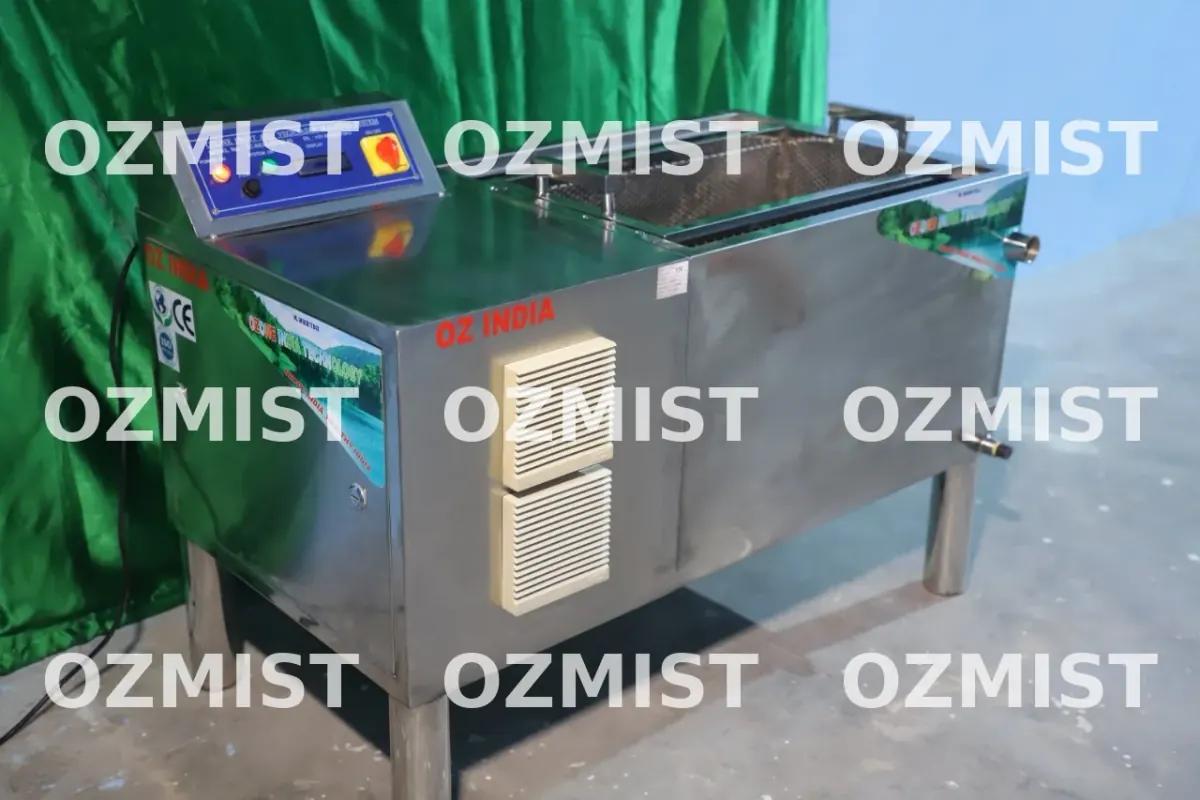
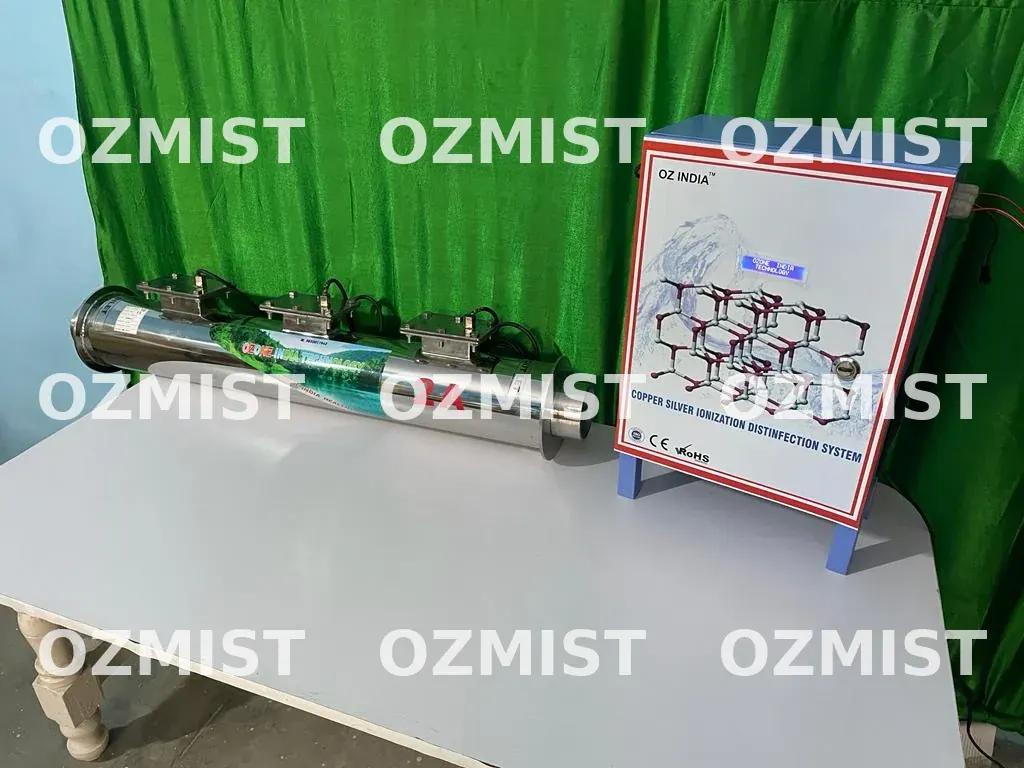
The Ozone Fruit & Vegetable Washer is deployed across a diverse set of Indian industrial and commercial contexts. What follows is a set of expert application briefs prepared by our engineering team, each describing the operating problem, the applicable Indian and international standards, and how Ozmist's configuration is engineered to meet it.
Every application description references peer-reviewed research or a named regulatory standard so procurement teams, quality engineers, and plant managers can validate the claims against their own audit expectations. Sources are cited in the References section at the end of this page. If your application does not match one of the profiles below, contact our engineering team via the quote form — the majority of custom Ozmist installations begin with a spec conversation rather than a datasheet pick.
Institutional Kitchens and Mid-day Meal Programs
Institutional catering · FSSAI Schedule IV; HACCP
Large institutional kitchens — including school mid-day meal schemes, university mess halls, and government catering operations — handle several hundred kilograms of leafy greens, root vegetables, and fruits daily. Manual washing at this scale is inconsistent, and residual pesticide + microbial load has been implicated in multiple FSSAI-recorded institutional outbreaks. An ozone washer replaces multi-stage chlorine dips with a chemical-free, single-cycle process that consistently achieves 3–5 log reduction in E. coli and Salmonella at 2 ppm dissolved ozone with 3-minute contact, per Journal of Food Engineering (2019) trial data. Integration into HACCP as a critical control point provides audit-ready ozone concentration + time records.
Fresh-cut and Ready-to-Eat Salad Processing
Fresh-cut produce processing · FSSAI microbiological criteria for fresh-cut produce
Ready-to-eat salad and fresh-cut fruit units operate under tight FSSAI microbiological targets: total plate count below 100,000 CFU/g and total coliforms below 100 CFU/g at pack-out. Chlorine washes at 100–200 ppm free chlorine are effective but generate chloramine off-notes on tender leaves. Ozone washing at 1.5 ppm dissolved concentration achieves equivalent or superior microbial reduction on iceberg, romaine, and baby-leaf spinach with no residual taste, per Postharvest Biology and Technology (2020). The Ozmist unit runs shorter cycles for delicate leaves (90 seconds) and longer cycles for firmer produce (up to 5 minutes) under programmable recipes.
Hospital and Healthcare Catering
Hospital catering · NABH kitchen standards; WHO Safe Food for Vulnerable Groups
Immunocompromised patients — oncology wards, transplant units, neonatal facilities — require food prepared to neutropenic-diet standards where Listeria, E. coli O157:H7, and Salmonella loads on fresh produce must be reduced to non-detectable levels. Ozone washing at 2–3 ppm dissolved concentration with 5-minute contact provides > 5 log reduction on Listeria monocytogenes surface contamination per International Journal of Food Microbiology (2018). Ozmist’s stainless construction, CIP mode, and residual ozone destructor meet WHO Safe Food for Vulnerable Groups guidance and support hospital NABH compliance.
Export-oriented Fresh Produce Units
Agri-export pack-houses · EU 396/2005; GlobalG.A.P.; APEDA export protocols
Indian exporters of fresh grapes, pomegranates, mangoes, and green chillies must meet the receiving country’s Maximum Residue Limits — EU (Regulation 396/2005), USA (EPA MRLs), and Japan (Positive List). APEDA export rejection data 2020–2023 show pesticide residue as a leading cause of consignment rejection. Ozone washing degrades organophosphates (chlorpyrifos, monocrotophos) by 40–70% at 3 ppm with 5-minute contact per Biosystems Engineering (2019), and can be integrated as a pre-packing step in EurepGAP/GlobalG.A.P. certified pack-houses. Ozmist supplies units engineered for pack-house floor plans with conveyor-fed loading.
Hotel and Restaurant Central Commissaries
Hospitality commissary · FSSAI Schedule IV Section 3.6
Hotel groups and QSR chains operating central commissaries wash and prep produce for distribution to 20–200 outlets. Batch-to-batch consistency is critical: a single contaminated batch can trigger multi-outlet food-safety incidents. The ozone washer provides a documented, repeatable sanitation step with per-batch logging (concentration, time, kg processed) that meets HACCP CCP verification requirements. FSSAI Schedule IV Section 3.6 mandates such records for FBOs above the Registration threshold. Chemical-free operation also eliminates the sodium load from hypochlorite washing that concerns health-focused hotel brands.
Food Processing Plants (Pickles, Sauces, Frozen Veg)
Food processing · ISO 22000; FSSAI Schedule IV
Upstream produce sanitation is the single largest determinant of finished-product shelf life in pickled, fermented, and frozen vegetable processing. Higher initial microbial load compresses safe shelf life and increases the pasteurisation intensity required. Replacing a chlorine dip with ozone washing typically reduces initial mesophilic count from 10ⶠCFU/g to below 10ⴠCFU/g on cauliflower, carrot, and green pea inputs, per Journal of Food Protection (2017), extending frozen-vegetable retail shelf life by 3–4 months at –18°C. Ozmist scales the washer to line throughput and integrates ozone concentration data into the plant’s SCADA for ISO 22000 traceability.