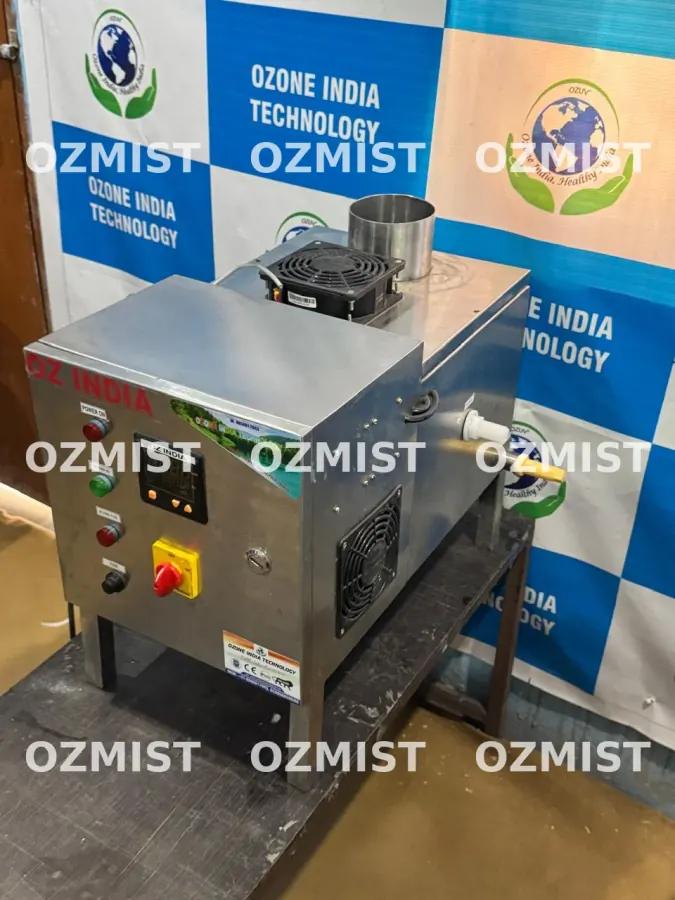
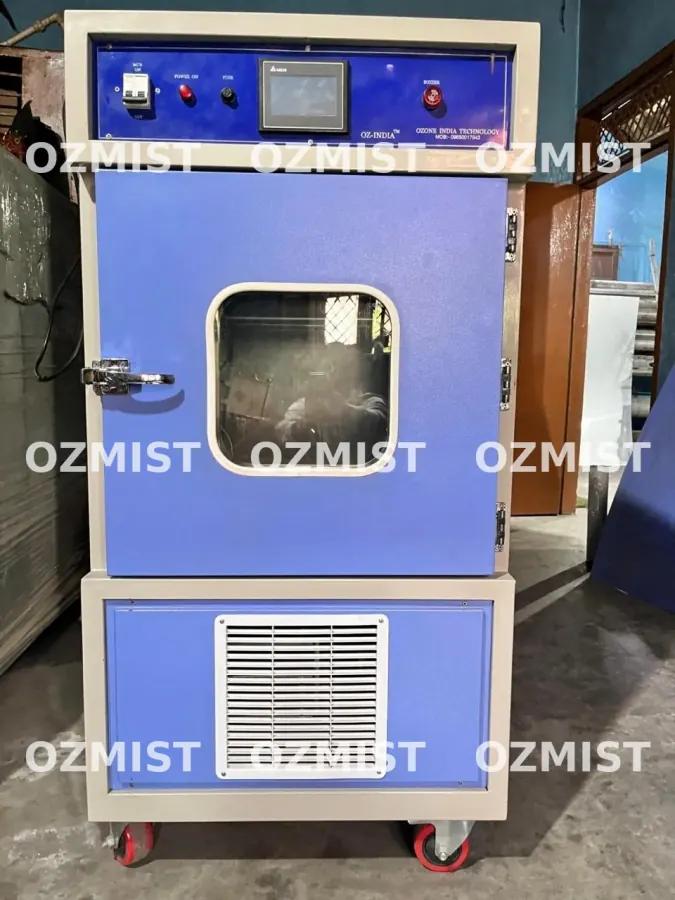
The Decant Dehumidifier is deployed across a diverse set of Indian industrial and commercial contexts. What follows is a set of expert application briefs prepared by our engineering team, each describing the operating problem, the applicable Indian and international standards, and how Ozmist's configuration is engineered to meet it.
Every application description references peer-reviewed research or a named regulatory standard so procurement teams, quality engineers, and plant managers can validate the claims against their own audit expectations. Sources are cited in the References section at the end of this page. If your application does not match one of the profiles below, contact our engineering team via the quote form — the majority of custom Ozmist installations begin with a spec conversation rather than a datasheet pick.
Construction Handover Drying
Construction
Concrete slabs, screeds, plaster, and paint all release moisture as they cure and dry. If a building is closed up and handed over before this moisture is removed, the trapped moisture damages finishes and creates mould problems. Construction contractors increasingly deploy decant dehumidifiers in the final weeks before handover to accelerate drying and meet contract moisture-content specifications on structural elements. A single 500 L/day decant unit can dry a 2,000 m² office floor in 10–14 days, versus 4–6 weeks of natural drying.
Large-scale Flood Restoration
Emergency restoration · IICRC S500
Municipal buildings, hospitals, and industrial facilities affected by flooding need much more aggressive dehumidification than portable industrial units can provide. Decant dehumidifiers extract 500–1000 L/day per unit — often multiple units are deployed for a single restoration project. IICRC S500 emphasises rapid moisture removal to prevent secondary damage; decant units enable “open-drive†drying that returns the building to service faster and reduces mould-related insurance claims.
Warehouse and Cold-Store Load Reduction
Large-scale warehousing
Very large warehouses (>10,000 m³) sometimes require decant-scale dehumidification during monsoon to hold RH below 60%. Ozmist supplies multiple decant units in parallel with a central humidistat controller. Because the units use hot-gas defrost, they operate reliably in cold-store loading areas where ambient temperature drops with the season.
Museum, Archive, and Fine Art Storage
Cultural heritage / archives
Museums and government archives maintain strict RH targets (typically 45–55% ±3%) to preserve paper, textiles, and painted surfaces. Portable decant units are used to bring facilities back on-spec after HVAC breakdowns or during monsoon load spikes. Ozmist supplies national and state museum projects with decant units on casters and quiet operating variants for gallery-adjacent deployment.
Ship-yard and Marine Vessel Drying
Shipbuilding and marine
Ship-yards drying vessel interiors, coating booths, and dry-dock spaces need very large moisture removal capacity. Marine coating applications require RH below 50% for cure integrity of certain marine paint systems. Decant dehumidifiers are deployed with duct connections to specific spaces — cargo holds, machinery rooms, coating booths — with humidistat control per zone.