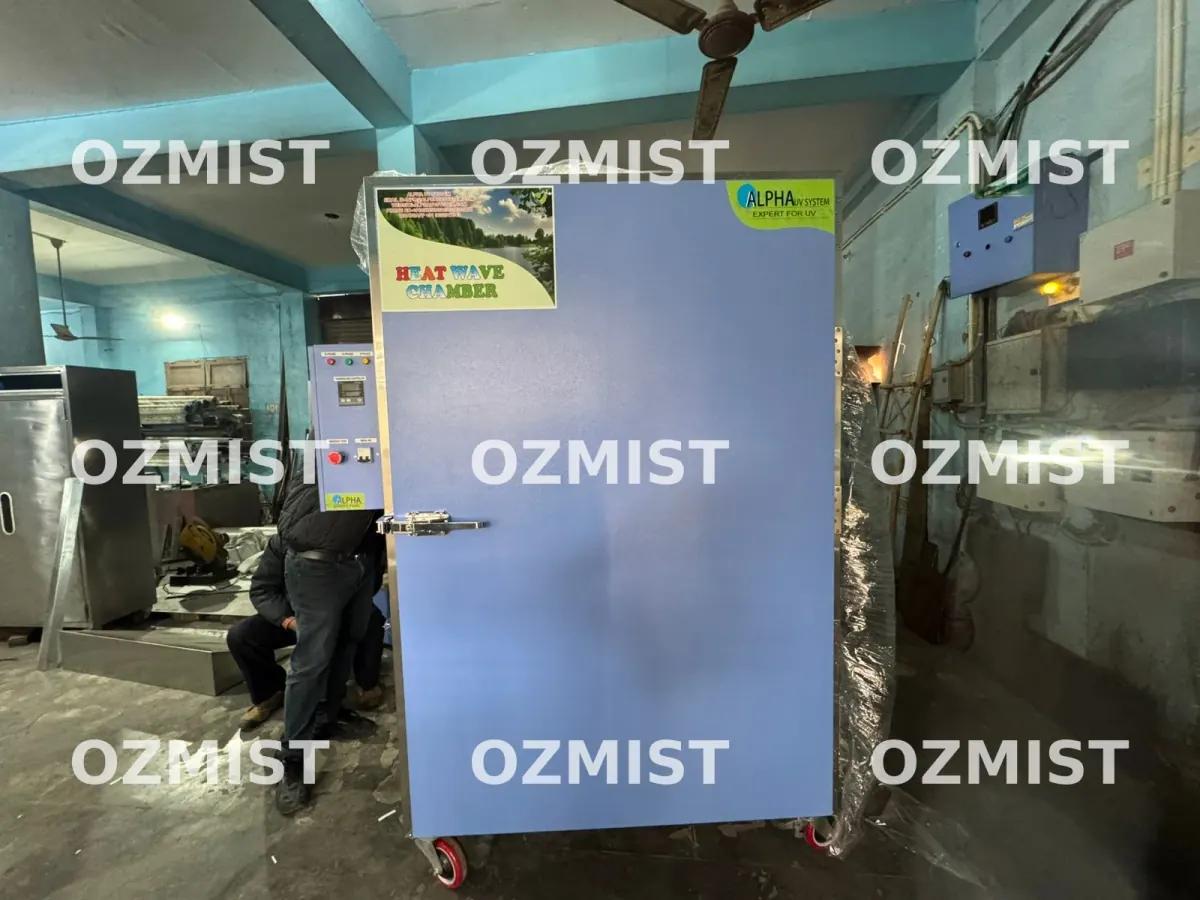
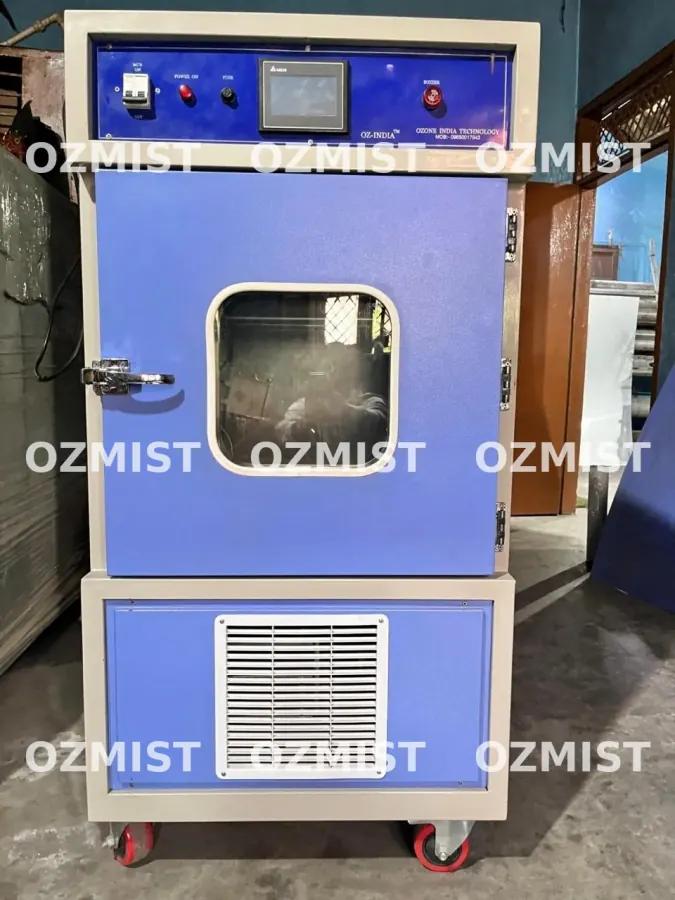
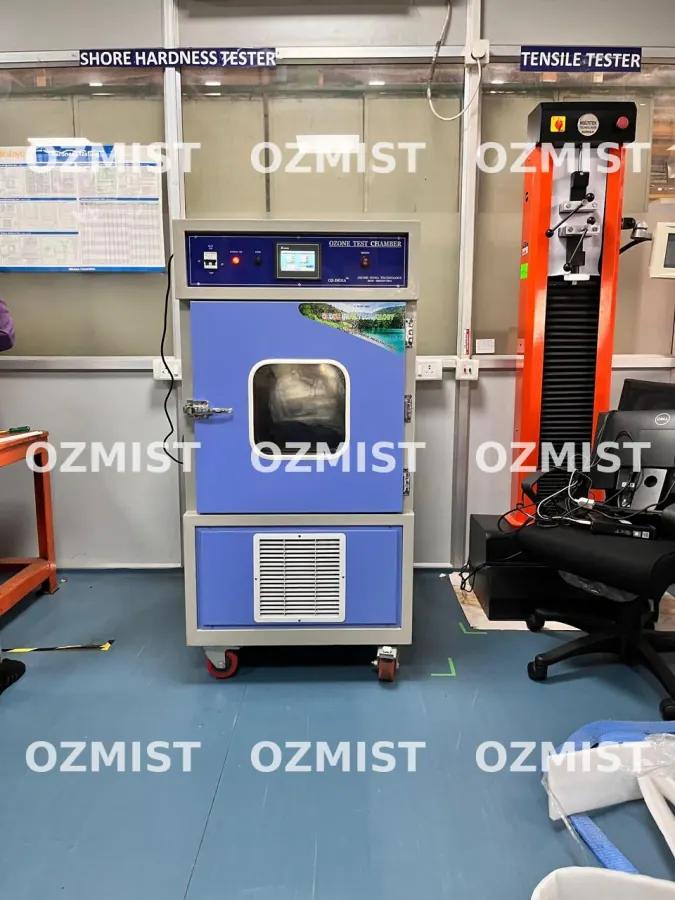
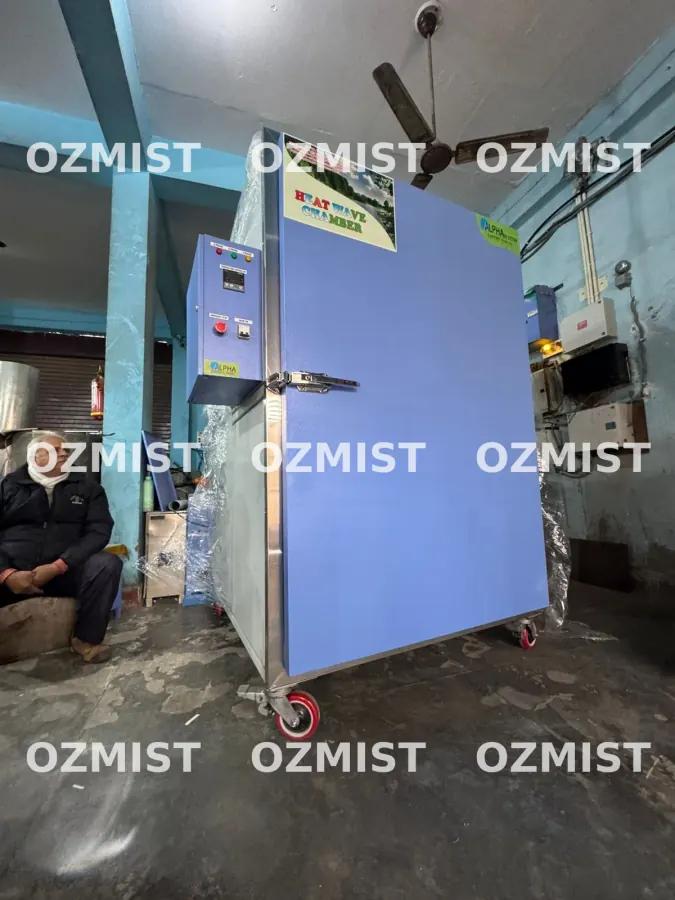
The Industrial Oven is deployed across a diverse set of Indian industrial and commercial contexts. What follows is a set of expert application briefs prepared by our engineering team, each describing the operating problem, the applicable Indian and international standards, and how Ozmist's configuration is engineered to meet it.
Every application description references peer-reviewed research or a named regulatory standard so procurement teams, quality engineers, and plant managers can validate the claims against their own audit expectations. Sources are cited in the References section at the end of this page. If your application does not match one of the profiles below, contact our engineering team via the quote form — the majority of custom Ozmist installations begin with a spec conversation rather than a datasheet pick.
IEC 60068-2-2 Dry-Heat Testing of Electronics
Electronics testing · IEC 60068-2-2
IEC 60068-2-2 dry-heat testing at 55°C, 70°C, 85°C, or 125°C for 16 or 96 hours qualifies electronic products for hot-climate operation. Failure modes include solder joint fatigue, plastic housing deformation, capacitor life shortening. Ovens with ±1.5°C stability and low spatial uniformity variation are required. Ozmist’s programmable ovens run the standard IEC 60068-2-2 profile from HMI presets and log the test cycle for QA records. Used by Indian electronics manufacturers for BIS certification and export testing.
Adhesive and Coating Cure Testing
Chemicals / coatings
Two-part epoxies, powder coatings, polyurethane laminates, and PSA adhesives require defined cure temperature and time to reach specified properties. Cure schedules from 60°C / 2 hours to 200°C / 30 minutes are common. Coating applicators, laminators, and adhesive manufacturers use ovens for cure verification during formulation R&D and inbound QA of purchased material. Ozmist supplies coating labs and adhesive-tape converters with ovens sized to their sample throughput.
Pharmaceutical Drying and Depyrogenation
Pharmaceutical · WHO GMP; USP <1211>
Pharmaceutical excipient drying, glassware depyrogenation (≥ 250°C for ≥ 30 min), and container preparation use hot-air ovens. Depyrogenation-grade ovens require ±5°C uniformity and calibrated cycle time. Ozmist supplies a pharma variant with 316L interior, HEPA filter on air inlet, and IQ/OQ + validation documentation supporting WHO GMP and Schedule M compliance.
Textile Shrinkage and Colourfastness Testing
Textile testing · BIS IS 2977; ASTM D2960
BIS IS 2977 (dry heat shrinkage of textiles) and various ASTM colourfastness tests require conditioned dry-heat exposure. Textile testing labs and mill quality departments use ovens for these standardised tests. Ozmist chambers are used by BIS-accredited test houses and mill QC labs across the Delhi NCR textile cluster.
General Laboratory Drying
Analytical / QA labs
Analytical laboratories dry glassware after cleaning, dry filter papers and precipitates for gravimetric analysis, and pre-condition samples before instrumentation. Reliable, uniform temperature control avoids sample decomposition and improves gravimetric accuracy. Ozmist supplies university labs, testing houses, and R&D groups with mid-size 100–250 L ovens.